The Endocannabinoid System Explained: How It Works and Why CBD Matters
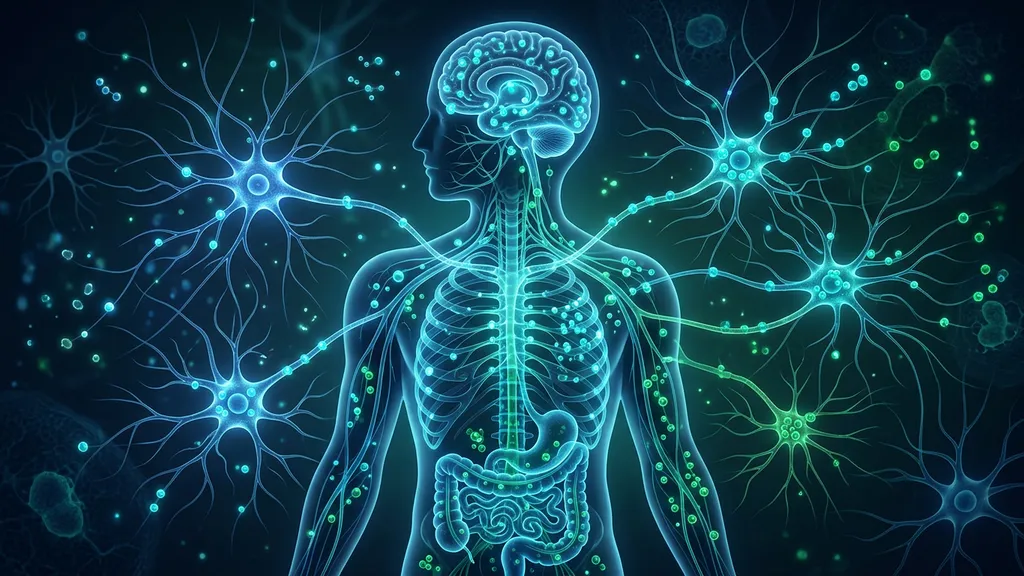
The endocannabinoid system (ECS) is one of the most important regulatory systems in the human body, yet it was only discovered three decades ago. This complex network of receptors, molecules, and enzymes plays a central role in maintaining internal balance -- what scientists call homeostasis.
Understanding the ECS is key to grasping how CBD and other cannabinoids interact with our biology. Whether you use CBD oil or CBD flowers, this guide walks through the system's components, its history, how it works, and where cannabidiol fits into this molecular architecture.
The discovery story
The history of ECS research is full of fascinating turns. It all started with a plant, but what scientists ultimately discovered was a fundamental aspect of human biology. The fact that an entire regulatory system (one that influences mood, appetite, sleep, immune function, and more) went completely unnoticed until the late 20th century is itself remarkable. It was the cannabis plant that accidentally led researchers to one of the most important physiological systems in the body.
In 1964, Israeli chemist Raphael Mechoulam isolated THC, which raised a fundamental question: why does the human body have receptors that can recognise a plant molecule?
Scientific timeline
- 1964: Mechoulam and Gaoni isolate delta-9-THC
- 1988: Howlett and Devane identify the first cannabinoid receptor (CB1)
- 1992: Mechoulam and Hanus discover anandamide, the first endocannabinoid
- 1993: The CB2 receptor is identified in immune system cells
- 1995: 2-arachidonoylglycerol (2-AG) is discovered
For CBD basics, check out our complete guide to CBD.
The three components of the ECS
1. Cannabinoid receptors
CB1 receptor: primarily in the central nervous system. Associated with motor coordination, memory, sensory perception, appetite regulation.
CB2 receptor: primarily in immune system cells. Associated with immune modulation and tissue homeostasis.
Additional receptors: GPR55 (sometimes called the "third cannabinoid receptor"), TRPV1 (vanilloid receptor), PPARs (nuclear receptors).
2. Endocannabinoids
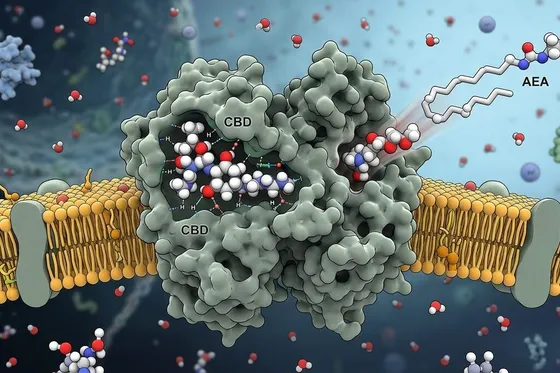
Anandamide (AEA): named from the Sanskrit "ananda" meaning "bliss." Binds mainly to CB1, produced on demand, short-lived due to FAAH enzyme breakdown.
2-AG: the most abundant endocannabinoid in the brain. Binds to both CB1 and CB2, present at concentrations 170 times higher than anandamide in the brain. Broken down by MAGL enzyme.
3. Enzymes
- FAAH: breaks down anandamide
- MAGL: breaks down 2-AG
- DAGL: synthesises 2-AG
- NAPE-PLD: synthesises anandamide from membrane precursors
Homeostasis: the ECS's core job
The ECS participates in regulating numerous physiological processes: temperature regulation, sleep-wake cycles, appetite and metabolism, mood, immune function, neuroprotection, and reproduction. It works as a "regulator of regulators" -- it does not directly control specific functions but adjusts the signaling systems that manage them.
How CBD interacts with the ECS
Cannabidiol has a unique relationship with the endocannabinoid system. Unlike THC, which binds directly to CB1 and CB2 receptors, CBD modulates the system indirectly.
CBD's mechanisms of action
- Allosteric modulation: CBD binds to a different site on CB1 receptors, changing their shape and how they respond to other cannabinoids
- FAAH inhibition: CBD slows down anandamide breakdown, indirectly increasing available anandamide levels
- Interaction with other receptors: CBD interacts with serotonin receptors (5-HT1A), vanilloid receptors (TRPV1), and nuclear receptors (PPARs)
- Endocannabinoid tone modulation: rather than directly stimulating the system, CBD adjusts its overall sensitivity
CBD does not work as an ON/OFF switch on the ECS. It functions more like a dial that fine-tunes the system's sensitivity. This indirect approach is why CBD does not produce the psychoactive effects of THC -- it does not overactivate the brain's CB1 receptors.
The ECS in your skin
Often overlooked: your skin has its own endocannabinoid system. CB1 and CB2 receptors are present in the epidermis, hair follicles, and sebaceous glands. This cutaneous ECS participates in sebum production regulation, cell renewal, and skin barrier maintenance -- which explains the growing interest in CBD cosmetics.
Current research
ECS science is still young. Active research areas include: clinical endocannabinoid deficiency, enzymatic modulation, orphan receptors, and ECS-microbiome interactions.
Discover CBD products at JustBob - 15% off
Check out our article on CBD vs THC, the CBD legal Europe guide, and our article on CBD and sleep to understand how the ECS influences different aspects of wellness.
The Endocannabinoid System (ECS): Receptors, Endocannabinoids and Function
The endocannabinoid system ECS is built on three components: cannabinoid receptors (CB1 and CB2, both GPCRs), endocannabinoids produced by the body (AEA or anandamide, and 2-AG), and the enzymes that synthesise and break these molecules down. CB1 receptors concentrate in the nervous system, where they modulate mood, pain perception, learning and memory. CB2 receptors sit mainly on immune cells and play a role in the stress response and inflammation. Plant cannabinoids from cannabis interact with this same network, which is why CBD and THC produce measurable effects on the body.
The Role of the Endocannabinoid System in Learning, Memory and Homeostasis
The endocannabinoid system ECS is often described by experts as the body's master regulator: it maintains homeostasis across multiple systems, including the nervous system, the digestive system and the skin. Its function in learning and memory is well documented, and so is its role in the stress response. When researchers talk about phytocannabinoids like CBD influencing the endocannabinoid system, they mean that the plant compounds modulate how receptors, endocannabinoids and enzymes communicate. That is the biological basis for every discussion about why cannabis and hemp produce any effect on the body at all.
FAQ -- Endocannabinoid System
1. Does the ECS work without taking CBD or cannabis?
Absolutely. The ECS is an endogenous physiological system that runs constantly, regardless of any phytocannabinoid exposure. Your body makes its own endocannabinoids (anandamide, 2-AG) as needed.
2. Do all mammals have an ECS?
Yes. The ECS is found in all mammals, birds, reptiles, fish, and even some invertebrates. It is an extremely ancient system in evolutionary terms, appearing roughly 600 million years ago.
3. Does CBD replace natural endocannabinoids?
No. CBD modulates the ECS but does not replace endocannabinoids. By inhibiting the FAAH enzyme, it lets anandamide stay active longer rather than substituting for it.
Here is a scientific fact that might surprise you: that "runner's high" you feel after intense exercise? For decades, scientists attributed it to endorphins. But a landmark 2015 study published in the Proceedings of the National Academy of Sciences (PNAS) turned that assumption on its head. Researchers found that the euphoria, reduced anxiety, and pain reduction experienced after running were actually driven by endocannabinoids (specifically anandamide) rather than endorphins. The study showed that endorphins are too large to cross the blood-brain barrier, while anandamide levels surge during exercise and can directly access the brain. So the "runner's high" is really an endocannabinoid high.
4. Can you strengthen your ECS naturally?
Yes: physical activity (stimulates anandamide production), a diet rich in omega-3 and omega-6 fatty acids, and stress management all support a well-functioning ECS.
5. Where can you buy quality CBD products?
At JustBob, you will find quality CBD products with code PROMO15 for 15% off.
For more, check out our CBD oil guide and our article on the entourage effect.